
 Image 1 of 1
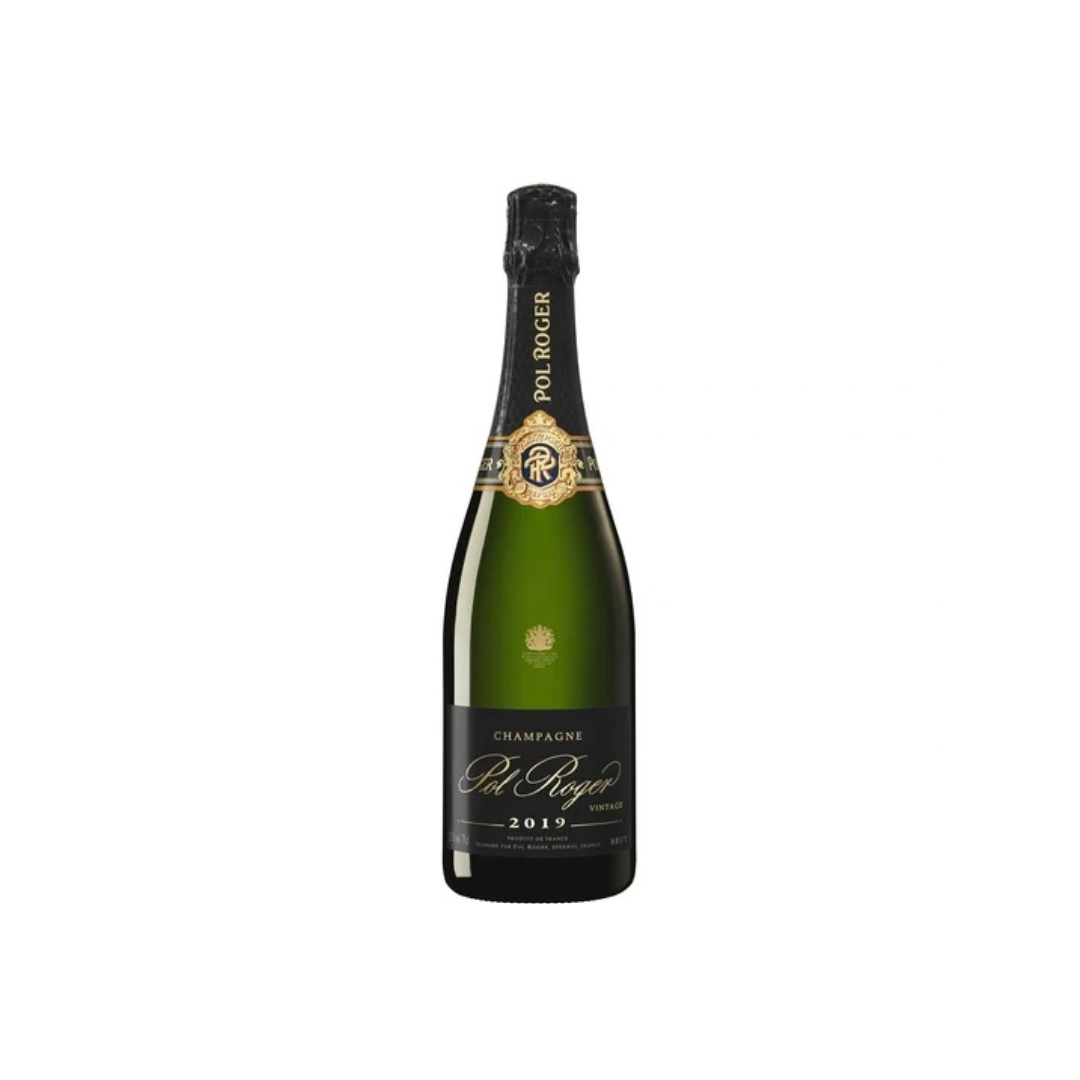
Pol Roger Champagne Brut 2019 - France
THE CUVÉE
The Pol Roger Vintage 2019 cuvée is made exclusively with grapes from the finest Premier and Grand Cru vineyards of the Montagne de Reims (including Ambonnay, Bouzy and Verzenay), the Grande Vallée de la Marne (including Cumières, Hautvillers and Mareuil-sur-Aÿ) and the Côte des Blancs (including Avize, Chouilly and Vertus).
TASTING NOTES
With a delicate pale gold hue flecked with silvery tints, the wine has a lovely radiance and purity, threaded with persistent streams of fine bubbles.
The first nose is subtle and precise, with an array of fruity aromas dominated by yellow fruits (fresh pineapple, lemon, yellow peach), complemented by hints of dried fruit and nuts, especially hazelnut. With aeration, the bouquet deepens to reveal exotic fruits (papaya, mango), along with notes of Mirabelle and red plum, and a touch of deliciously tart strawberry. The aromatic complexity builds steadily, supported by a mineral, iodised structure and lifted by spicy and menthol notes, with a delicious hint of panettone.
The palate is fresh and immediately elegant. On entry, the wine is lively and clean cut, with good volume and a harmonious vinosity carried by citrus flavours (orange peel, blood orange, candied lemon, grapefruit). The tension, underpinned by a fine acidity, brings energy and precision. The wine’s iodine and saline quality adds contrast and definition, creating a subtle savoury edge, while the lift of candied lemon neatly frames its intensity. The balance between freshness, roundness and length is remarkable, giving the impression of a bright, youthful character. A long, fresh finish that naturally invites another sip.
Even in its very early youth, this champagne shows impressive intensity and complexity with a nobility that hints at remarkable ageing potential, worthy of the finest wines of a standout vintage.
POL ROGER’S APPROACH TO VINTAGE CHAMPAGNE
As the northernmost of France's wine regions, the weather in Champagne can sometimes be capricious. For this reason, since its creation in 1849, Pol Roger has maintained the tradition of producing a vintage champagne only when weather conditions allow the production of grapes ofexceptional ripeness.
A vintage champagne must, above all, be a very well-balanced champagne. This balance comes from having a good alcohol potential and the right degree of freshness. The first criterion for declaring a vintage year is the wine's ability to age in the cellar, enabled by a sufficiently high level of acidity, in addition to its taste balance. With time, vintage champagne will reveal the innumerable qualities that nature has bestowed upon it.
THE STORY OF THE VINTAGE
The winegrowing year began with a mild winter, punctuated by a few cold spells in December and January. Rainfall, which had been frequent since November, was accompanied by snowfall in January, which helped to replenish the water in the soil. From mid-February, sunny weather set in and lasted until the end of March, despite a few morning frosts.
Spring was marked by cool, wet weather. April brought several episodes of frost, and was followed by a rainy May. Early June ushered in summer conditions, resulting in a rapid resumption of vegetative growth. Full flowering occurred on 18 June, slightly later than the average date. Over the summer, the vines had to contend with two heatwaves, which included a record high of 42.9°C. Despite significant water stress, the rainfall in August allowed the ripening process to resume. In the run-up to the harvest, the bunches of grapes were healthy and of lovely quality. The harvest took place in ideal conditions from 10 to 24 September. In the vat room, the musts showed exceptional balance, with freshness, maturity, richness and aromatic expression in perfect harmony.
VINIFICATION AND MATURATION
Once harvested, the grapes were quickly and gently pressed. A first settling took place at the pressing facility, followed by a second (cold) settlingin our vat room for 24 hours. Alcoholic fermentation took place at low temperatures in temperature-controlled stainless steel vats, with each variety and each cru kept separate until final blending. Malolactic fermentation was carried out as it is for all our wines. After tasting, blending and bottling, the second fermentation and ageing took place in the cool environment of our cellars, located 33 metres below ground. Here, the champagne underwent the traditional riddling-by-hand process before disgorgement and dosage. The wines then rested for at least six months before being shipped.
THE CUVÉE
The Pol Roger Vintage 2019 cuvée is made exclusively with grapes from the finest Premier and Grand Cru vineyards of the Montagne de Reims (including Ambonnay, Bouzy and Verzenay), the Grande Vallée de la Marne (including Cumières, Hautvillers and Mareuil-sur-Aÿ) and the Côte des Blancs (including Avize, Chouilly and Vertus).
TASTING NOTES
With a delicate pale gold hue flecked with silvery tints, the wine has a lovely radiance and purity, threaded with persistent streams of fine bubbles.
The first nose is subtle and precise, with an array of fruity aromas dominated by yellow fruits (fresh pineapple, lemon, yellow peach), complemented by hints of dried fruit and nuts, especially hazelnut. With aeration, the bouquet deepens to reveal exotic fruits (papaya, mango), along with notes of Mirabelle and red plum, and a touch of deliciously tart strawberry. The aromatic complexity builds steadily, supported by a mineral, iodised structure and lifted by spicy and menthol notes, with a delicious hint of panettone.
The palate is fresh and immediately elegant. On entry, the wine is lively and clean cut, with good volume and a harmonious vinosity carried by citrus flavours (orange peel, blood orange, candied lemon, grapefruit). The tension, underpinned by a fine acidity, brings energy and precision. The wine’s iodine and saline quality adds contrast and definition, creating a subtle savoury edge, while the lift of candied lemon neatly frames its intensity. The balance between freshness, roundness and length is remarkable, giving the impression of a bright, youthful character. A long, fresh finish that naturally invites another sip.
Even in its very early youth, this champagne shows impressive intensity and complexity with a nobility that hints at remarkable ageing potential, worthy of the finest wines of a standout vintage.
POL ROGER’S APPROACH TO VINTAGE CHAMPAGNE
As the northernmost of France's wine regions, the weather in Champagne can sometimes be capricious. For this reason, since its creation in 1849, Pol Roger has maintained the tradition of producing a vintage champagne only when weather conditions allow the production of grapes ofexceptional ripeness.
A vintage champagne must, above all, be a very well-balanced champagne. This balance comes from having a good alcohol potential and the right degree of freshness. The first criterion for declaring a vintage year is the wine's ability to age in the cellar, enabled by a sufficiently high level of acidity, in addition to its taste balance. With time, vintage champagne will reveal the innumerable qualities that nature has bestowed upon it.
THE STORY OF THE VINTAGE
The winegrowing year began with a mild winter, punctuated by a few cold spells in December and January. Rainfall, which had been frequent since November, was accompanied by snowfall in January, which helped to replenish the water in the soil. From mid-February, sunny weather set in and lasted until the end of March, despite a few morning frosts.
Spring was marked by cool, wet weather. April brought several episodes of frost, and was followed by a rainy May. Early June ushered in summer conditions, resulting in a rapid resumption of vegetative growth. Full flowering occurred on 18 June, slightly later than the average date. Over the summer, the vines had to contend with two heatwaves, which included a record high of 42.9°C. Despite significant water stress, the rainfall in August allowed the ripening process to resume. In the run-up to the harvest, the bunches of grapes were healthy and of lovely quality. The harvest took place in ideal conditions from 10 to 24 September. In the vat room, the musts showed exceptional balance, with freshness, maturity, richness and aromatic expression in perfect harmony.
VINIFICATION AND MATURATION
Once harvested, the grapes were quickly and gently pressed. A first settling took place at the pressing facility, followed by a second (cold) settlingin our vat room for 24 hours. Alcoholic fermentation took place at low temperatures in temperature-controlled stainless steel vats, with each variety and each cru kept separate until final blending. Malolactic fermentation was carried out as it is for all our wines. After tasting, blending and bottling, the second fermentation and ageing took place in the cool environment of our cellars, located 33 metres below ground. Here, the champagne underwent the traditional riddling-by-hand process before disgorgement and dosage. The wines then rested for at least six months before being shipped.